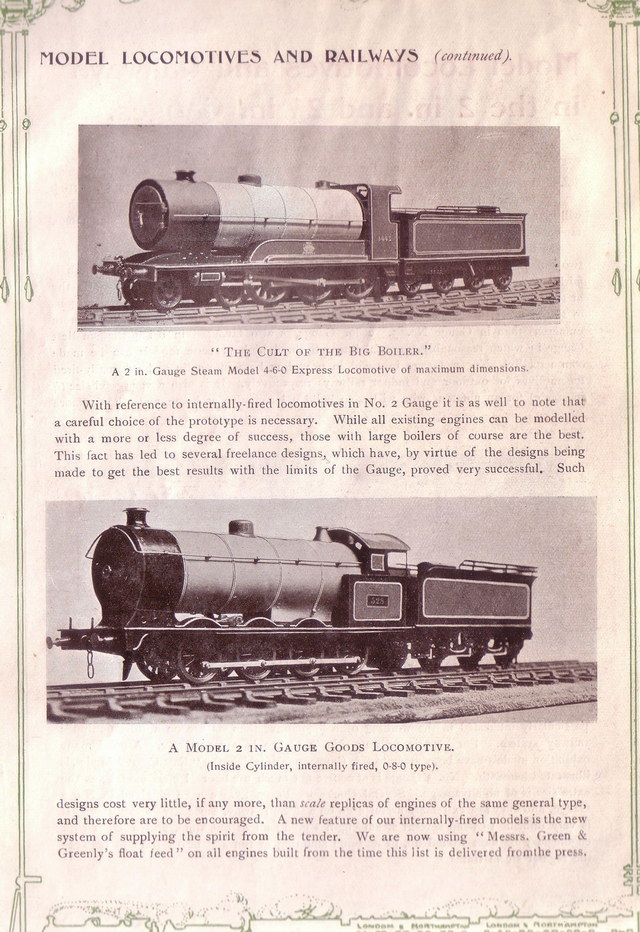
"The Cult of the Big Boiler"
A fashion for large boilered Gauge 2 model
locomotives developed late in the history of Gauge 2, in
response to the limited performance of Smithies boilers.
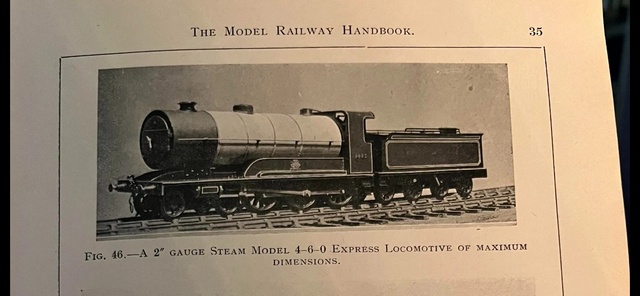
Locomotives of this type were illustrated in Bassett Lowke's
catalogue and in Greenly's 'Model Railway Handbook':
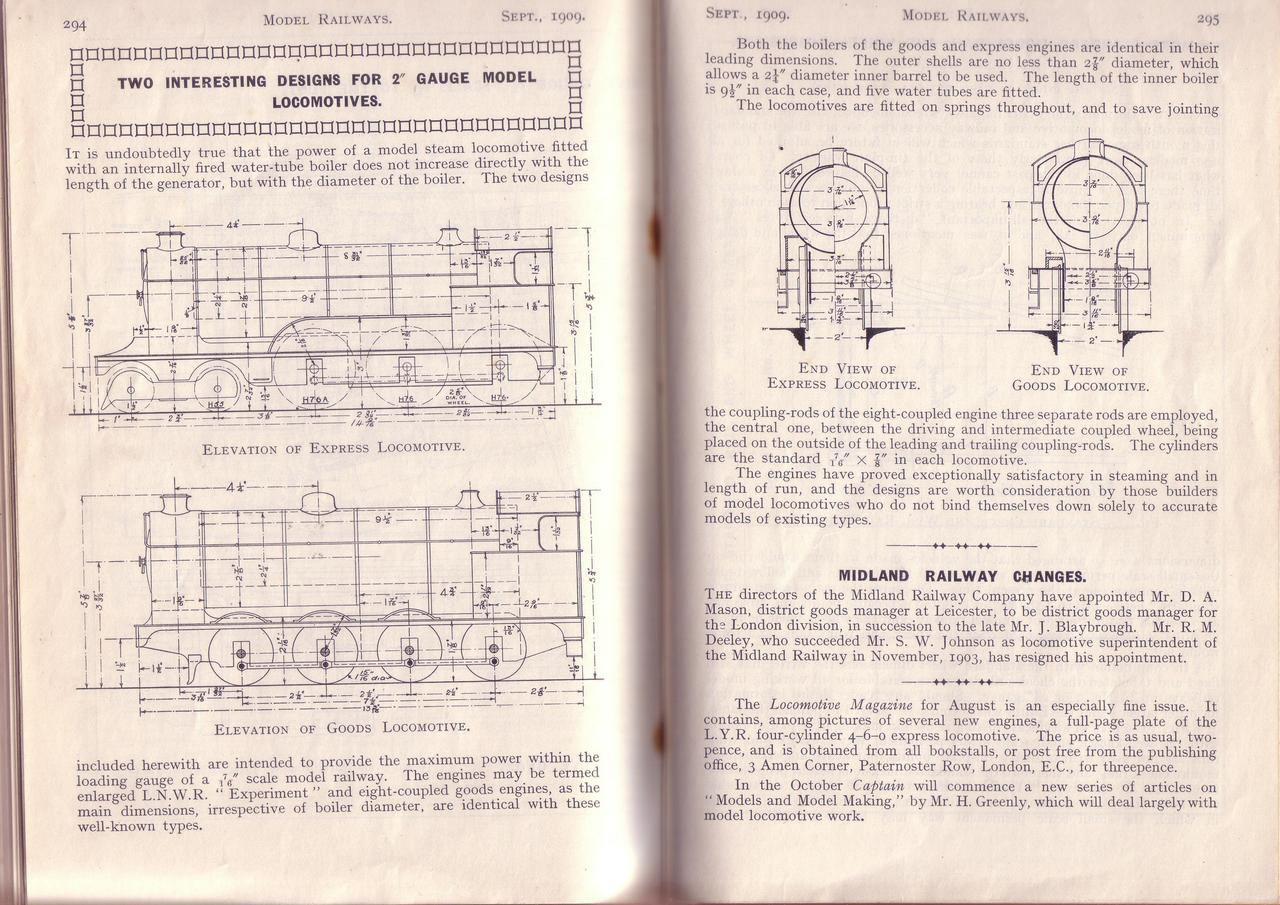
The construction of these two locomotives was described in 'Models, Railways and Locomotives' in September, 1909:
The 4-6-0 model, or one very much like it, is known to still exist at Bressingham Steam Museum:
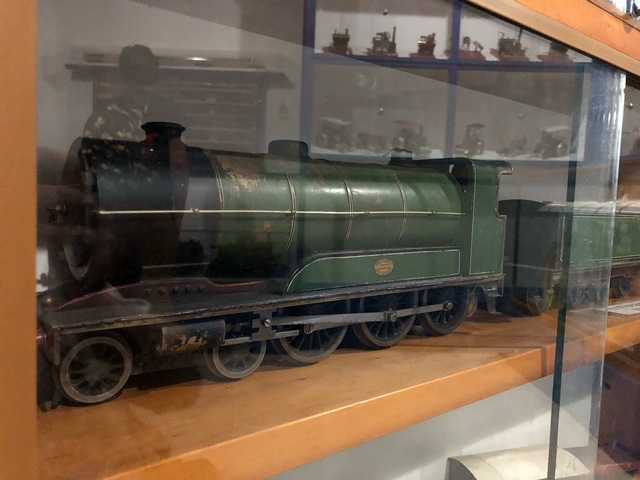
(Photo courtesy of Ed Potts).
A large boilered 0-8-0 has recently entered the collection, resembling the one illustrated in MR&L but having outside cylinders and in North Eastern style:
This model requires considerable boiler work before it can run. In the meantime, attention switches to the 4-6-0.
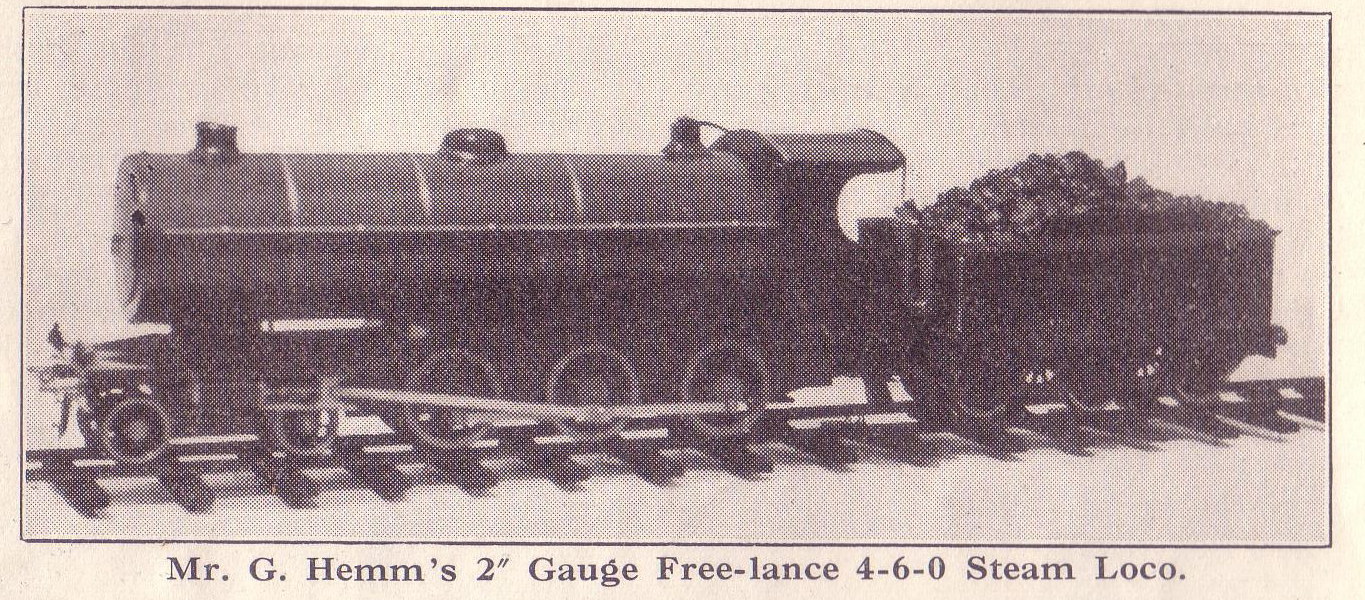
In 1932 Mr Gordon Hemms published an article about a similar large boilered 4-6-0:
Her's the article:
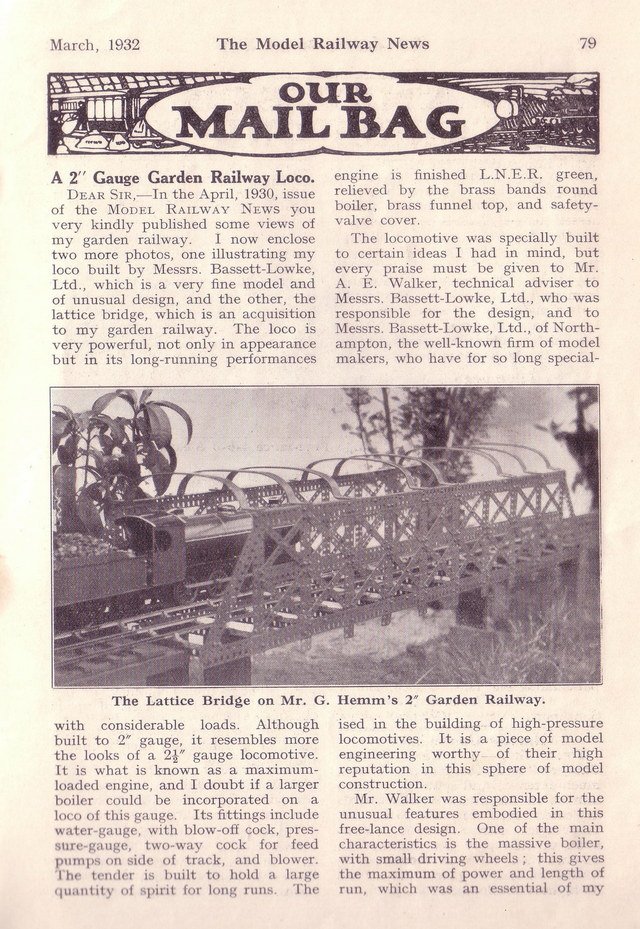
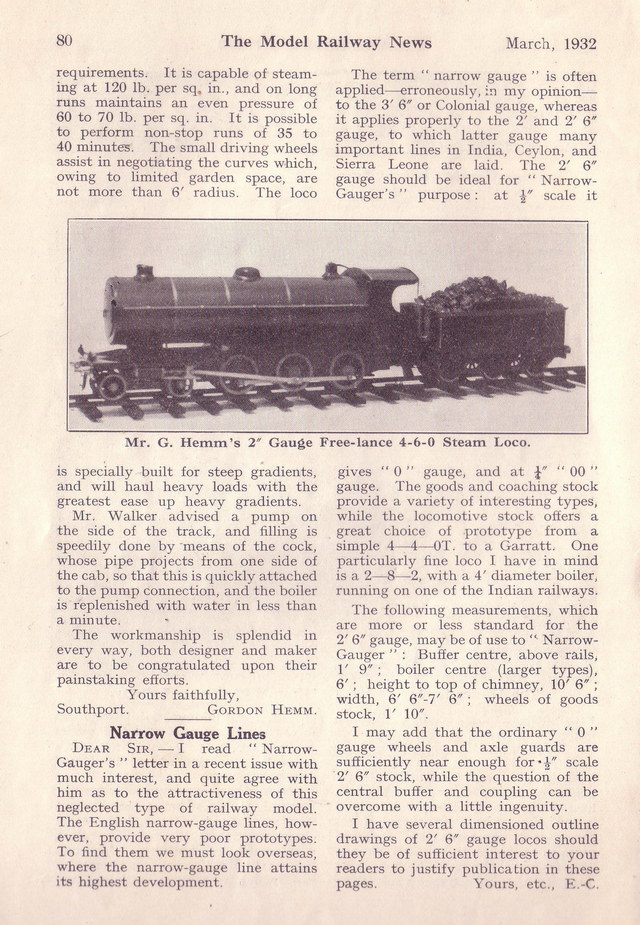
Mr Hemm described the smaller wheels on this locomotive as being for 'hill climbing' but otherwise it is very similar to the 4-6-0 at Bressingham. He says that it could achieve 120 psi (!) and maintains 60-70 psi for runs of 35 to 40 minutes. It will negotiate 6' radius curves and will haul 'very heavy loads'.
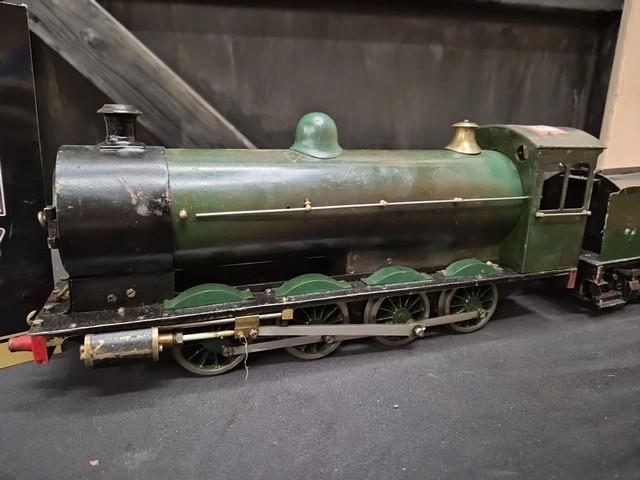
The opportunity to find out about these claims arose in 2025 when a very similar, if not the same, locomotive came up at auction. Here it is:
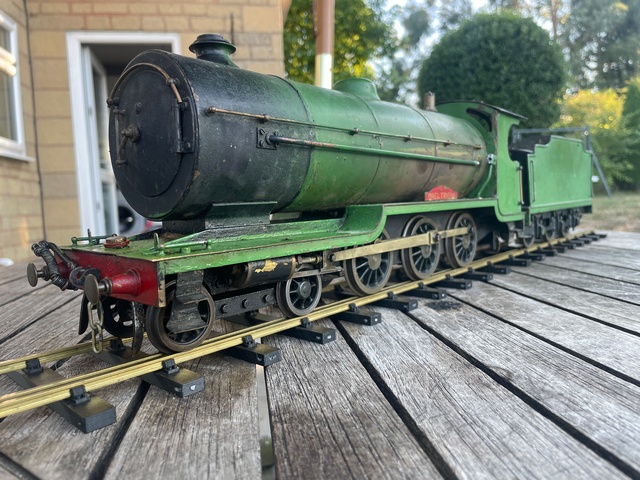
Mr Hemms says that the loco was 'specially built' to his requirements, but there are some differences between the surviving loco and his photo. For instance, the raised splashers are not obvious in Mr Hemm's photos, and the tender profile is different. The surviving loco has front steps and has been crudely over painted in a light green and the name 'Moel Tryfan' added to nameplates that are not obvious in Mr Hemm's pictures.
Mr Hemm talks about a boiler feed water clack with piping 'outside the cab' for operation from a lineside pump, whereas the surviving model has a large (and early) Bassett Lowke injector somewhat crudely installed in the cab. This could reflect Mr Hemm's continuing dissatisfaction with the feedwater arrangements in this period before models were efficient enough to operate axle pumps. This photo shows the injector tucked into the right hand side of the cab and is the only known example of a Gauge 2 locomotive fitted with this device.
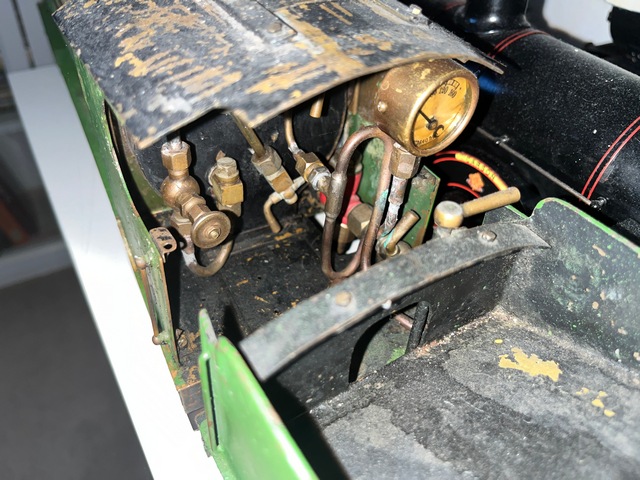
There's no feed water tank in the tender and the injector inlet is just a stub of pipe, presumably for connection to an external supply.
(Note the very original pressure gauge reads to 160 psi!). So even if this is not Mr Hemm's actual loco, it is a very close copy.
So how well does it run? The first thing to note that this is the very first Gauge 2 model that has run 'out of the box', without any fettling or repair. Even the original drip feed burner was in place, very unusual in itself, but also three of the six asbestos wicks were still present. (These have been replaced with less satisfactory ceramic string). Here it is on it's first outing for maybe 80 years:
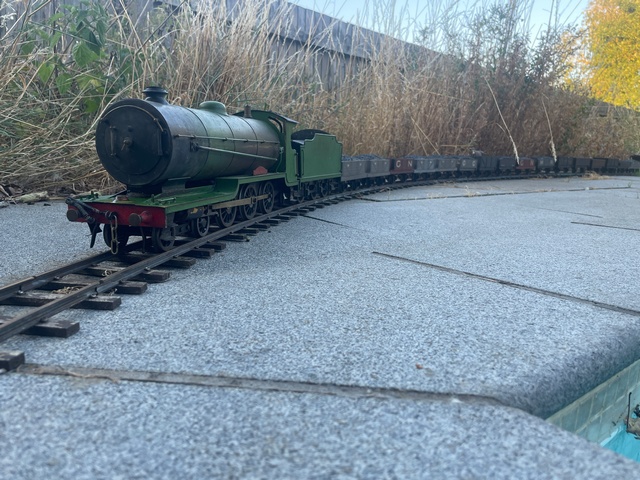
So does it pull a 'heavy load'? Judge for yourself! https://youtu.be/r8GKklUXonY
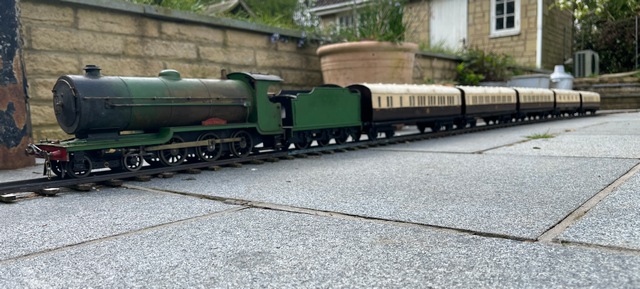
These five GW coaches are made in metal with fully sprung bogies and are by far the heaviest stock on the Gauge 2 railway!
PS. Mr Hemm relocated his railway and published an account of the new installation in MRN (Model Railway News) in September 1933. You can read it here.
The construction of these two locomotives was described in 'Models, Railways and Locomotives' in September, 1909:
The 4-6-0 model, or one very much like it, is known to still exist at Bressingham Steam Museum:
(Photo courtesy of Ed Potts).
A large boilered 0-8-0 has recently entered the collection, resembling the one illustrated in MR&L but having outside cylinders and in North Eastern style:
This model requires considerable boiler work before it can run. In the meantime, attention switches to the 4-6-0.
In 1932 Mr Gordon Hemms published an article about a similar large boilered 4-6-0:
Her's the article:
Mr Hemm described the smaller wheels on this locomotive as being for 'hill climbing' but otherwise it is very similar to the 4-6-0 at Bressingham. He says that it could achieve 120 psi (!) and maintains 60-70 psi for runs of 35 to 40 minutes. It will negotiate 6' radius curves and will haul 'very heavy loads'.
The opportunity to find out about these claims arose in 2025 when a very similar, if not the same, locomotive came up at auction. Here it is:
Mr Hemms says that the loco was 'specially built' to his requirements, but there are some differences between the surviving loco and his photo. For instance, the raised splashers are not obvious in Mr Hemm's photos, and the tender profile is different. The surviving loco has front steps and has been crudely over painted in a light green and the name 'Moel Tryfan' added to nameplates that are not obvious in Mr Hemm's pictures.
Mr Hemm talks about a boiler feed water clack with piping 'outside the cab' for operation from a lineside pump, whereas the surviving model has a large (and early) Bassett Lowke injector somewhat crudely installed in the cab. This could reflect Mr Hemm's continuing dissatisfaction with the feedwater arrangements in this period before models were efficient enough to operate axle pumps. This photo shows the injector tucked into the right hand side of the cab and is the only known example of a Gauge 2 locomotive fitted with this device.
There's no feed water tank in the tender and the injector inlet is just a stub of pipe, presumably for connection to an external supply.
(Note the very original pressure gauge reads to 160 psi!). So even if this is not Mr Hemm's actual loco, it is a very close copy.
So how well does it run? The first thing to note that this is the very first Gauge 2 model that has run 'out of the box', without any fettling or repair. Even the original drip feed burner was in place, very unusual in itself, but also three of the six asbestos wicks were still present. (These have been replaced with less satisfactory ceramic string). Here it is on it's first outing for maybe 80 years:
So does it pull a 'heavy load'? Judge for yourself! https://youtu.be/r8GKklUXonY
These five GW coaches are made in metal with fully sprung bogies and are by far the heaviest stock on the Gauge 2 railway!
PS. Mr Hemm relocated his railway and published an account of the new installation in MRN (Model Railway News) in September 1933. You can read it here.